


Diagnosis

Diagnosing RA has several difficulties:
- There is no definitive test for RA1
- Joint stiffness, inflammation, and swelling are common in many different conditions1,3
- There are over 200 forms of arthritis, as well as other autoimmune conditions, that may share some similar symptoms3
However, healthcare teams may be able to rule out certain types of arthritis and there may be differences in some of the symptoms.3
Keeping a diary of your symptoms could aid in your diagnosis
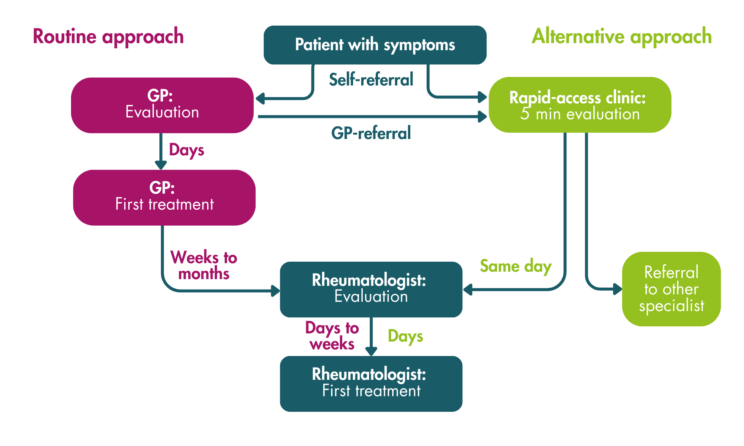
Rapid evaluation of patients after symptoms begin, by an experienced rheumatologist, enables early recognition and treatment. A faster diagnosis results in more rapid achievement of good outcomes and an earlier return to work and social activities, helping to improve patient quality of life.2 For example, the screening pathway below shows how an alternative approach can speed up diagnosis.
If your clinic allows it, why not ask a family member, partner or friend to come with you to appointments to support you? Don’t be afraid to ask lots of questions so you understand what’s going on.
References
- NHS England. Rheumatoid Arthritis – Diagnosis. Available at: https://www.nhs.uk/conditions/rheumatoid-arthritis/diagnosis/. Last accessed April 2025.
- Smolen JS, et al. Rheumatoid arthritis. Nat Rev Dis Primers. 2018;4, 18001.
- National Rheumatoid Arthritis Society. Possible complications and related conditions. Available at: https://nras.org.uk/resource/possible-complications-and-related-conditions/. Last accessed April 2025.