


Treatment
Disease modifying anti-rheumatic drugs are a group of medicines used to treat RA. There are three main types of DMARDs – conventional DMARDs, biological DMARDs and targeted synthetic DMARDs which are described below. Surgery and other treatment options may also be recommended.1
Disease-modifying anti-rheumatic drugs (DMARDs)
DMARDs are medicines that help slow down RA and protect your joints from damage. While painkillers and anti-inflammatories help you feel better short term, DMARDs treat the underlying cause of RA — your immune system attacking your joints.
Conventional DMARDs
Conventional DMARDs, which are usually taken as tablets,, aim to slow RA progression and ease symptoms.1 Conventional DMARDs work by broadly blocking the effects of chemicals released when your immune system is attacking the joints.1 There are many different types of conventional DMARDs, you may have to try different types to find the one that works best for you.1
Biologics and biosimilar DMARDs
Biologic medicines refer to medicines made from a biological source, such as living cells and organisms. “Biosimilars” is another term that may be used when talking about biologics. Biosimilars are biological medicines which are highly similar to the original biologic reference medicine in terms of quality, safety and efficacy. This means there is no clinically meaningful difference to the original biologic medicine.
Biologic DMARD treatments, given by injection, are usually used in combination with conventional DMARDs and usually after conventional DMARD treatment has not been effective.1 They target specific parts of the immune system to reduce inflammation more precisely.
Targeted synthetic DMARDs
Targeted synthetic DMARDs are DMARDs that work to block signals transmitted in the body from the immune system. Like biologics, targeted synthetic DMARDs target molecules related to inflammation, but these medications are synthetic rather than biological in origin.3
Targeted synthetic DMARDs are tablets which are taken orally and, like biologics, are usually used in combination with conventional DMARDs and usually after conventional DMARD treatment has not been effective.1
Surgery
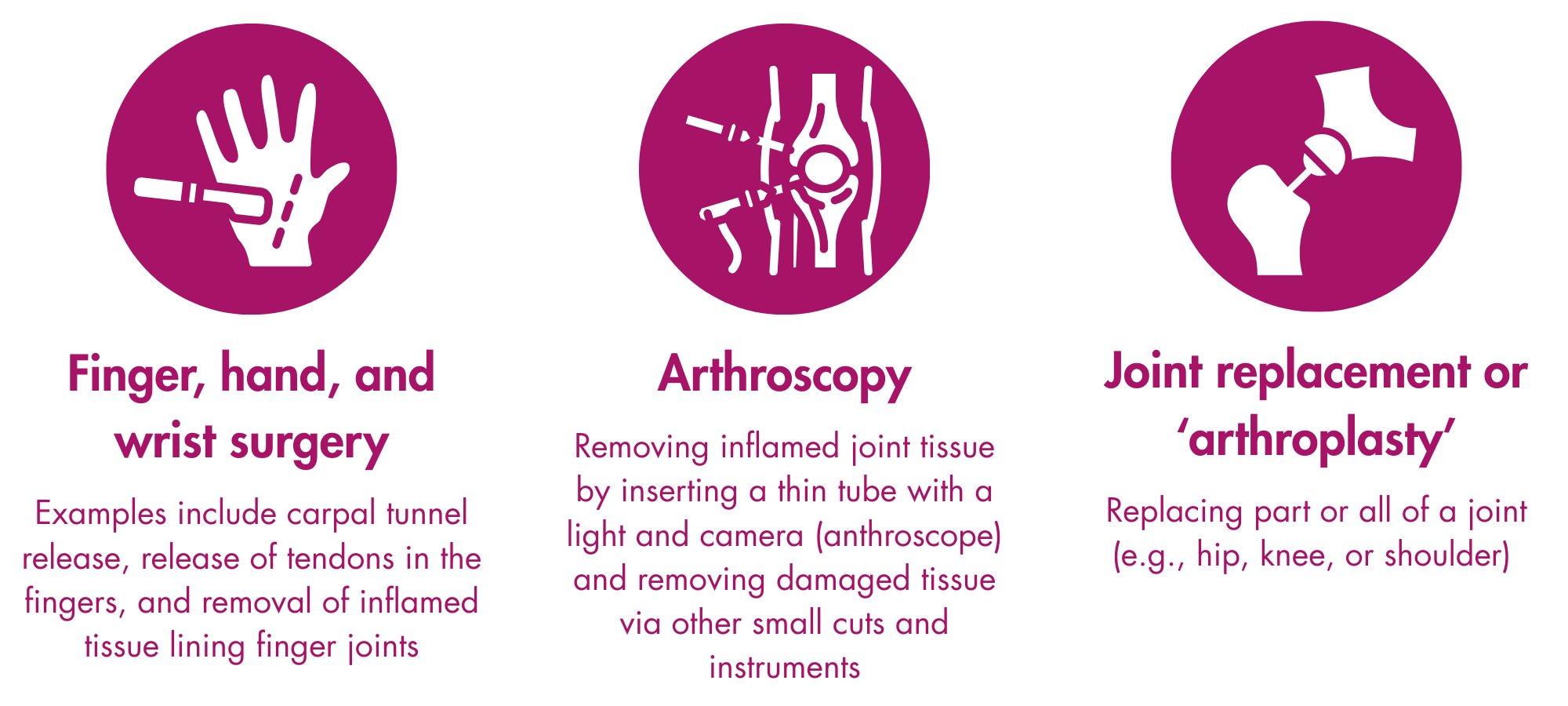
Medicines cannot always prevent your joints from becoming damaged. Surgery may be required to restore joint function, reduce pain, or fix deformities.1
Types of surgery that may be recommended for individuals with RA are summarised below:1
Other treatments for RA
Several other treatments and approaches may be recommended, usually in combination with the other main options such as DMARDs and biologic treatments.1
These include:
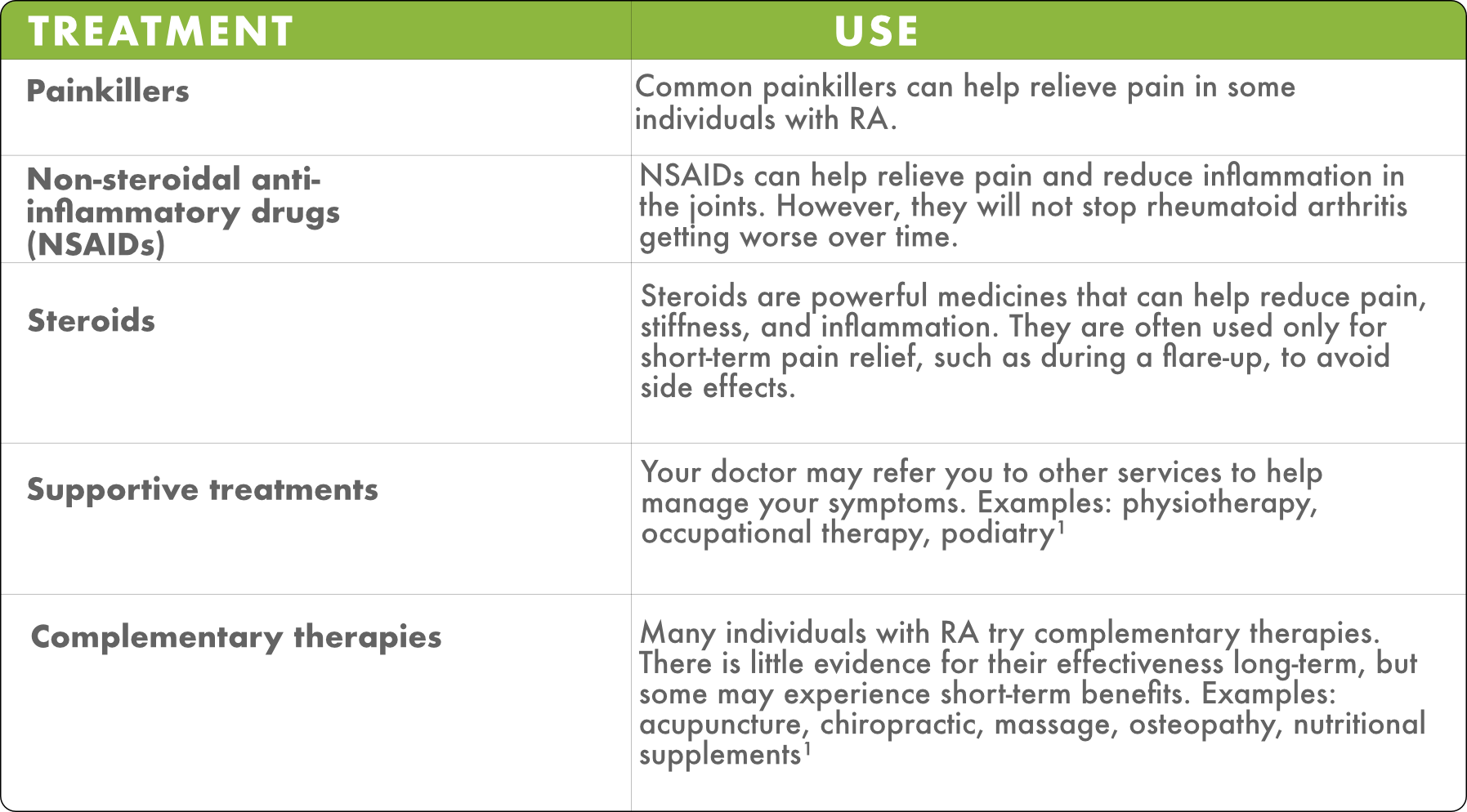
Make sure to follow your doctor’s advice. For example, if you’re prescribed NSAID tablets, you may also be given another medicine called a proton pump inhibitor (PPI) to reduce the risk of damage to the stomach lining.
References
- NHS England. Rheumatoid Arthritis – Treatment. Available at: https://www.nhs.uk/conditions/rheumatoid-arthritis/treatment/. Last accessed April 2025.
- Smolen JS, et al. Rheumatoid arthritis. Nat Rev Dis Primers. 2018;4, 18001.
- Biologics vs. JAK inhibitors for psoriatic arthritis – Medical News Today. Available at: https://www.medicalnewstoday.com/articles/biologics-vs-jak-inhibitors-for-psoriatic-arthriti. Last accessed April 2025.