

Day-to-day life
Vision loss can make daily tasks more difficult, but there are devices and techniques that can aid you in your day-to-day life.
Low vision aids and technology
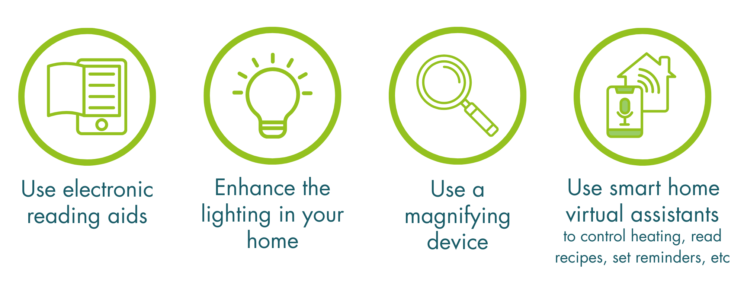
Using low vision aids and utilising technology can make daily tasks easier for you. Some examples are shown below:1
Low vision rehabilitation
This is a form of therapy for your eyes where a specialist can teach you techniques, such as eccentric viewing training, to make the most of your remaining vision. This is particularly useful when it comes to reading.1
Driving
Having vision loss doesn't immediately mean that you must stop driving, but there are minimum eyesight requirements which you must meet.2 Discuss your vision with your doctor, who can advise you on whether your sight is good enough to drive.
Work
You can still succeed at work despite having vision loss, and it shouldn’t be seen as a barrier to work. There are tools and techniques that can help you with daily tasks, but it might be worthwhile discussing your condition with your employer so they can help you and provide adjustments.
If you are finding work difficult, support and advice are available, such as through the RNIB.
For more advice and strategies on how to make the most of your vision, explore resources such as:
References
- Guide Dogs. Skills and strategies for central vision damage. Available at: https://www.guidedogs.org.uk/getting-support/information-and-advice/life-skills/making-the-most-of-your-vision/skills-and-strategies-for-central-vision-damage/. Last accessed May 2025.
- Driving Mobility. Eyesight and Hearing Impairment. Available at: https://www.drivingmobility.org.uk/driving-with-a-disability/eyesight-and-hearing-impairment/. Last accessed May 2025.