

mCNV
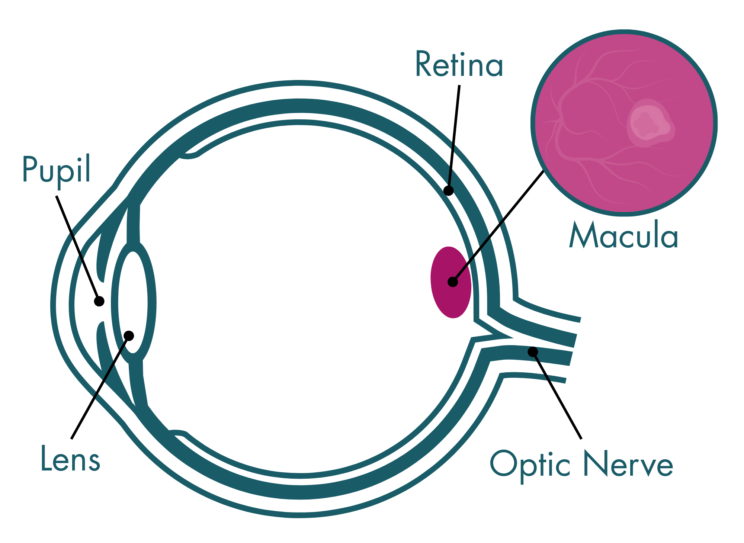
mCNV is the name given to central vision loss (the loss of the ability to see things straight ahead) caused by the growth of abnormal blood vessels at the back of your eye, in an area known as the macula.1
mCNV is a ‘complication’, as opposed to a stand-alone condition, because it develops from another condition— myopia (more commonly known as near-sightedness). mCNV can occur in patients with any degree of short-sightedness. However, the small subset of near-sighted individuals most at risk are those with severe (also known as high) near-sightedness, especially when pathologic, meaning it has caused structural changes in the eye, such as the formation of new blood vessels.2
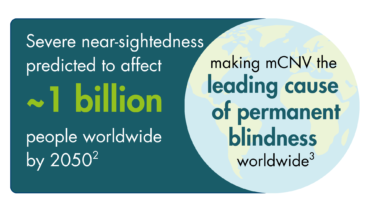
At current, near-sightedness affects around 30% of the world, so although mCNV only affects a small subset of these individuals, this still equates to a significant burden worldwide.3
References
- NHS Manchester Royal Eye Hospital Retinal Services Information for Patients. Treatment of Myopic Choroidal Neovascularisation (CNV). Accessible at: https://mft.nhs.uk/app/uploads/sites/2/2018/04/REH-213.pdf. Last accessed May 2025.
- Wong TY et al. Br J Ophthalmol. 2015;99(3):289-296.
- International Myopian Institute. Myopia. Available at: https://myopiainstitute.org/myopia/. Last accessed May 2025.