


Urticaria
Urticaria, commonly called “hives”, is a raised skin rash with itchy bumps known as “wheals” or “welts” on the skin, that look similar to blisters. For some people, urticaria episodes often do not have a specific trigger, whereas for other people, environmental factors like pollen, or certain foods can cause the rash to develop.1
The name “urticaria” comes from the scientific name for the common European stinging nettle Urtica dioica, and rashes often look very similar in appearance to a stinging nettle rash.
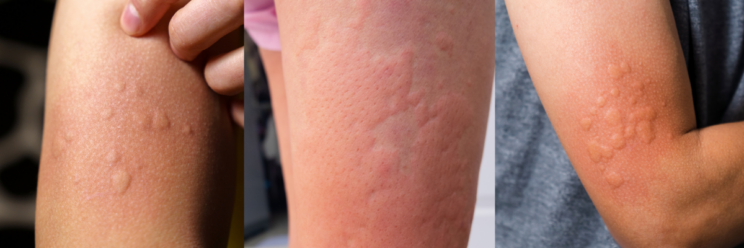
Urticaria can appear anywhere on the body, and wheals can grow and join with other wheals to make large areas of affected skin. It generally affects the top layers of skin only. Although angio-oedema is another form of urticaria, with swelling in deeper layers of the skin.2
Types of urticaria
Urticaria is classified based on how long symptoms last and if symptoms have a known trigger. Your doctor or dermatologist may have used some of the following terms:1
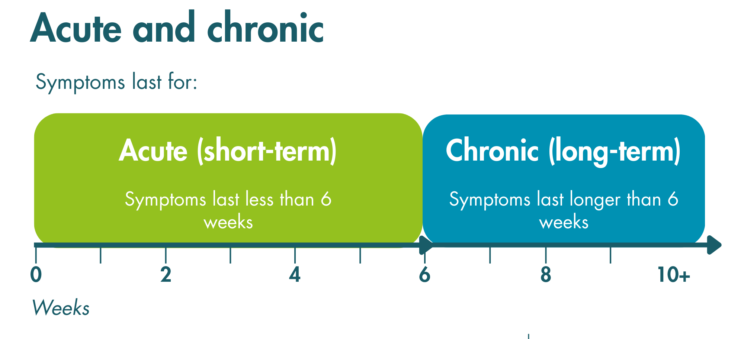
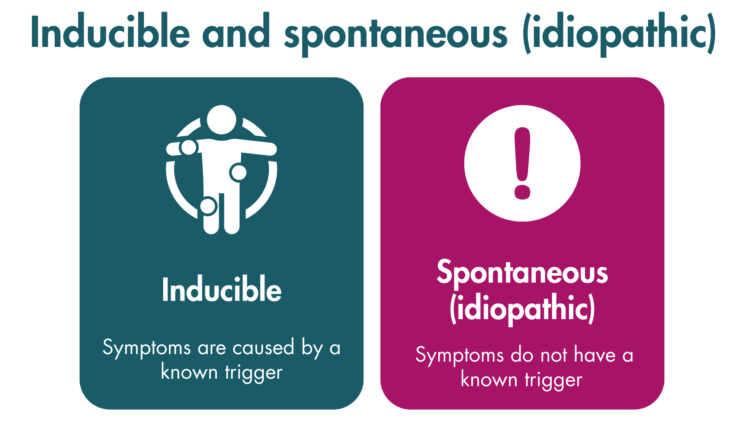
It is also possible to have both at the same time1
- 80-90% of cases in children and adults of chronic spontaneous (Idiopathic) urticaria appear without a specific discernible physical or environmental trigger.
- Chronic inducible urticaria is much less common and requires a specific trigger. It is often categorised by the stimulus, e.g. dermographism is a type of urticaria triggered by scratching or tight clothing, or cholinergic urticaria is triggered by increased body heat (due to exercise or emotional upset). Other rare triggers can include medications, cold, or stress.1
How many people have urticaria?
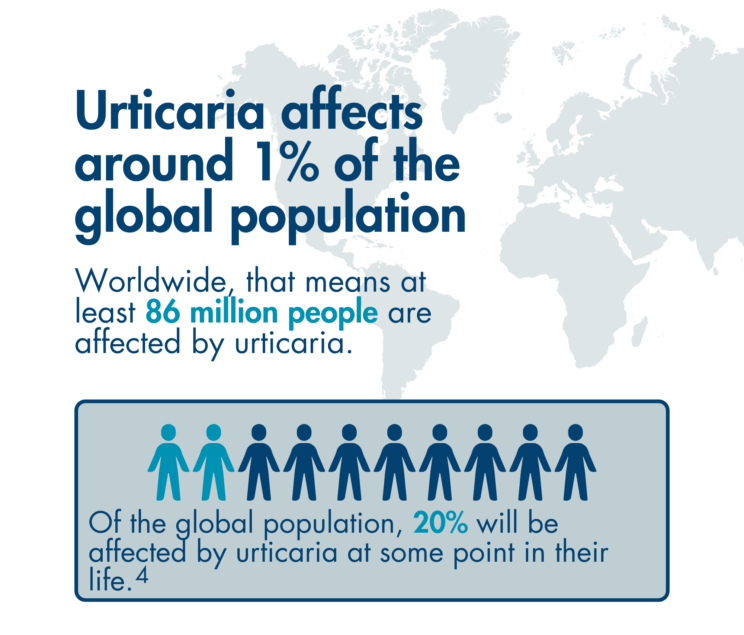
Urticaria is relatively common, affecting just over 1% of the global population. Women are twice as likely to experience symptoms as men, with the highest incidences occurring in children aged 1-4 years.2,3
References
- Chronic inducible urticaria. DermNet®. 2023. Available from: https://dermnetnz.org/topics/chronic-inducible-urticaria. Last accessed April 2025.
- NICE. Urticaria. NICE. 2024. Available from: https://cks.nice.org.uk/topics/urticaria/. Last accessed April 2025.
- Peck G, Hashim MJ, Shaughnessy C, Muddasani S, Elsayed NA, Fleischer AB Jr. Global Epidemiology of Urticaria: Increasing Burden among Children, Females and Low-income Regions. Acta Derm Venereol. 2021 Apr 22;101(4):adv00433. doi: 10.2340/00015555-3796. PMID: 33847367; PMCID: PMC9364256.