


About Urticaria
What causes urticaria?
The wheal and angioedema associated with chronic urticaria (CU) is caused by the release of chemicals that are involved in your immune system – such as histamines – that activate sensory nerves, dilate blood vessels and then allow fluid to leak into surrounding tissues.1
As mentioned in the Types of Urticaria section, inducible urticaria is caused by physical or environmental factors known as “triggers”. Another type of urticaria called spontaneous (idiopathic) urticaria does not have a known trigger.
Common triggers for urticaria include1,2:
- Certain food types, for example, eggs, dairy and shellfish
- Pollen and other airborne allergens
- Insect bites
- Latex
Other triggers for chronic inducible urticaria can include:1
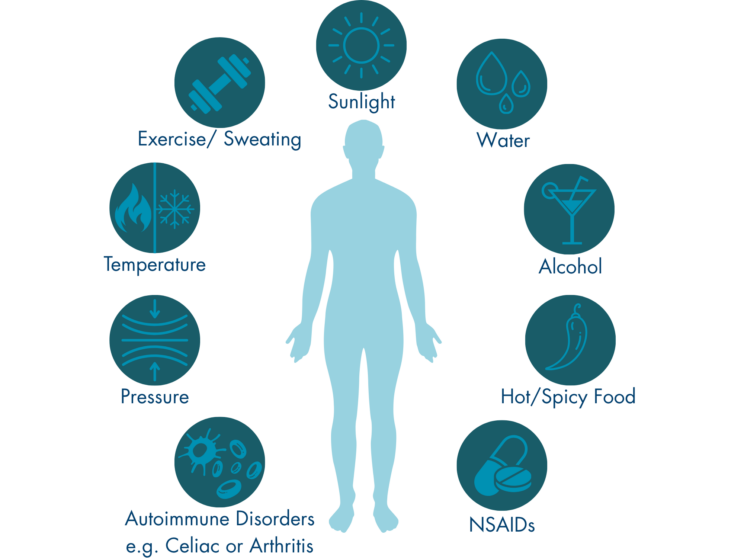
In addition to NSAIDs, drugs like beta-lactams are known triggers, with NSAIDs aggravating skin lesions in up to 50% of patients.3
References
- Chronic inducible urticaria. DermNet®. 2023. Available from: https://dermnetnz.org/topics/chronic-inducible-urticaria. Last accessed April 2025.
- Hives and angioedema – Symptoms and causes - Mayo Clinic. Available from: https://www.mayoclinic.org/diseases-conditions/hives-and-angioedema/symptoms-causes/. Last accessed May 2025.
- Hon KL, Leung AKC, Ng WGG, Loo SK. Chronic Urticaria: An Overview of Treatment and Recent Patents. Recent Patents on Inflammation & Allergy Drug Discovery. 2019 Aug 5;13(1):27–37.