


Diagnosis
If you have concerns regarding your health and are worried that you may have UC, you should seek assessment and advice from your GP as the primary point of contact. You may be referred to a specialist called a gastroenterologist, often shortened to ‘gastro’.
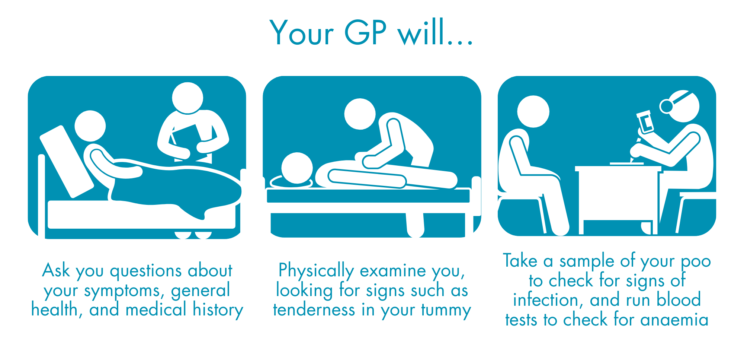
Diagnosis of UC is based on clinical symptoms and can be confirmed by objective findings from further examinations. If, after your initial appointment, your doctor suspects that you may have inflammatory bowel disease (meaning either UC or Crohn’s disease), you may be referred to the hospital for further tests. These may include X-rays and CT scans, which can rule out serious complications, as well as a detailed examination of your rectum and colon. There may also be endoscopic and histological examinations.1
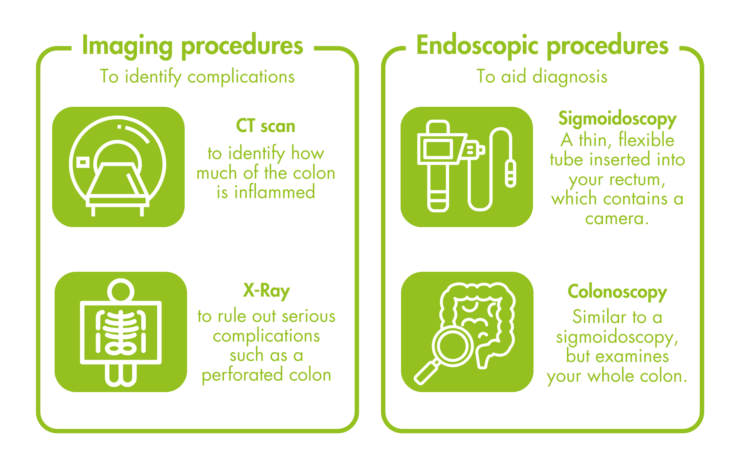
Endoscopic procedures can include biopsies, where small samples of tissue are removed to be tested in a laboratory. This is the only way that UC can be definitively diagnosed. The other tests mentioned above can be useful to rule out complications or other forms of inflammatory bowel disease (IBD) such as Crohn’s disease.2
References
- NHS – Ulcerative Colitis - Diagnosis. Available at: https://www.nhs.uk/conditions/ulcerative-colitis/diagnosis/. Last accessed April 2025.
- The Mayo Clinic – Ulcerative Colitis, diagnosis and treatment. Available at: https://www.mayoclinic.org/diseases-conditions/ulcerative-colitis/diagnosis-treatment/drc-20353331. Last accessed April 2025.