


Medications
Aminosalicylates
Aminosalicyclates are also known as 5-ASAs. They are a class of anti-inflammatory drug designed to reduce swelling (inflammation) in your gut. They are therefore commonly prescribed to treat IBD, including UC. They are generally the first medication that you would be prescribed to manage UC.1
Aminosalicylates come as tablets, granules, rectal foam, suppositories and enemas (liquid or foam you insert into the rectum through your bottom, using an applicator). Different types and brands of the drug act on different parts of the gut – for example, rectal foam, suppositories and enemas are likely to be prescribed if your UC is primarily affecting the lower part of your gut.
You should drink plenty of fluids, such as water, while you’re taking or using aminosalicylates to help prevent kidney problems.2
Corticosteroids
Corticosteroids are another medication which you could be prescribed to target inflammation in your gut if you have UC. They are a common treatment, with 4 out of 5 people who have Crohn’s or colitis taking them at some stage.3
Steroids are hormones – a type of chemical that your body produces naturally. Steroids used to treat UC are man-made versions of these hormones, taken in higher doses than your body normally makes. If you have UC, your immune system can get confused, mistaking your gut for harmful germs that it needs to attack and remove. Given in these higher doses, corticosteroids reduce immune system activity, therefore limiting the inflammation in your gut.
However, corticosteroids are used as a short-term treatment during a flare-up, designed to bring you back into remission. They should not be prescribed for long periods of time, or repeatedly, because they can cause unwanted side effects.
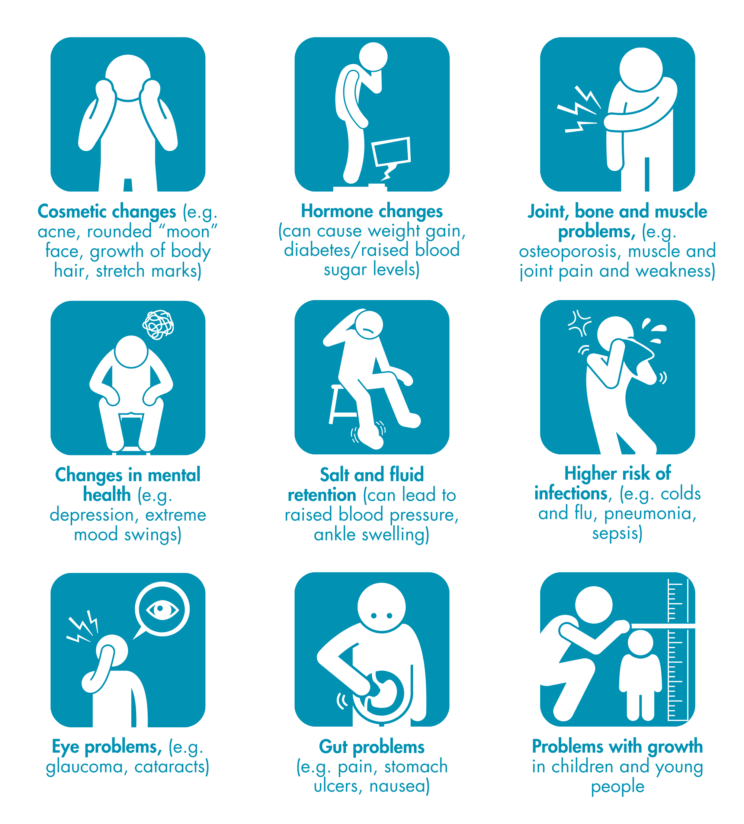
You shouldn’t have more than two courses of steroids in a year. If your GP has prescribed you a course of steroids, make sure you let your IBD team know at your next appointment.
Immunosuppressant drugs
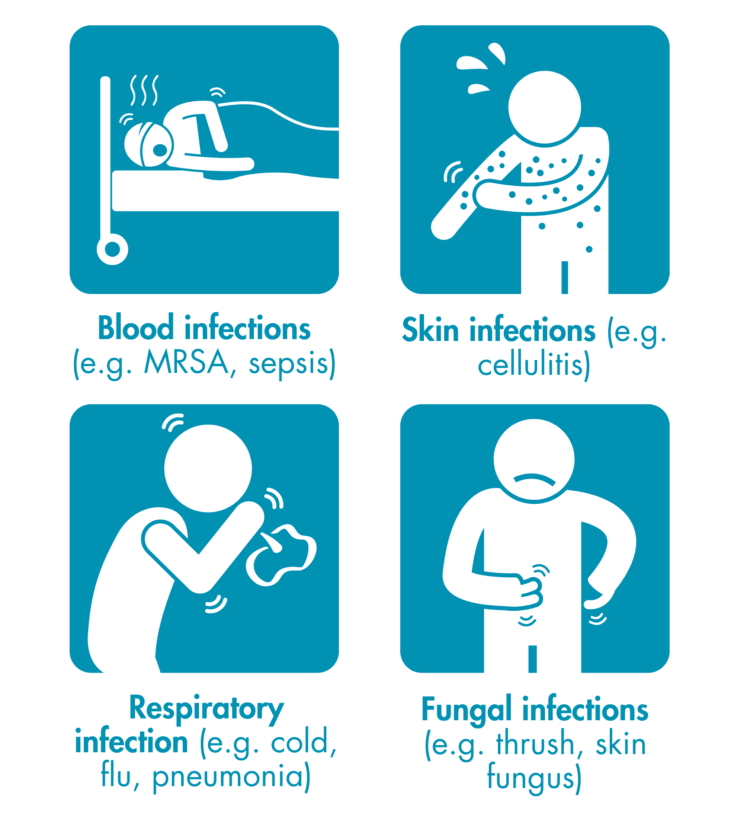
Like steroids, immunosuppressant drugs aim to reduce the activity of your immune system (to suppress it) in order to reduce inflammation.4 They may be prescribed if you aren’t responding to other treatments (or you are having severe side effects), or if you cannot take steroids any longer. Because your immune system is not working as it should when you take these medications, you are at higher risk of infection. People may get:
Biologics and biosimilars
Biologic medicines refer to medicines made from a biological source, such as living cells and organisms. “Biosimilars” is another term that may be used when talking about biologics. Biosimilars are biological medicines which are highly similar to the original biologic reference medicine in terms of quality, safety and efficacy. This means there is no clinically meaningful difference to the original biologic medicine.
Biologic treatments, given by an injection or infusion at hospital are usually used in when other therapies like aminosalicyclates have not been successful in treating ulcerative colitis.1 Biologic treatments target specific parts of the immune system to reduce inflammation more precisely.
Targeted synthetic medicines
Targeted synthetic medicines work to block signals transmitted in the body from the immune system. Like biologics, targeted synthetic medicines target molecules related to inflammation, but these medications are synthetic rather than biological in origin.1
Targeted synthetic medicines are tablets which are taken orally and, like biologics, are usually used when other therapies like aminosalicyclates have not been successful in treating ulcerative colitis.1
References
- NHS – Ulcerative colitis – Treatment. Available at: https://www.nhs.uk/conditions/ulcerative-colitis/treatment/. Last accessed April 2025.
- NHS – About mesalazine. Available at: https://www.nhs.uk/medicines/mesalazine/about-mesalazine/. Last accessed April 2025.
- Crohn’s and Colitis UK – Steroids information sheet. Available at: https://crohnsandcolitis.org.uk/media/vbwmctlt/steroids_ed_2a_2021.pdf. Last accessed April 2025.
- WebMD – Immunosuppressive drugs (Ulcerative colitis) Available at: https://www.webmd.com/ibd-crohns-disease/ulcerative-colitis/ulcerative-colitis-immunosuppressive-drugs. Last accessed April 2025.