


About acromegaly
What causes acromegaly?
Acromegaly is caused when a gland in your brain, called the pituitary gland, produces too much growth hormone over a period of time.1
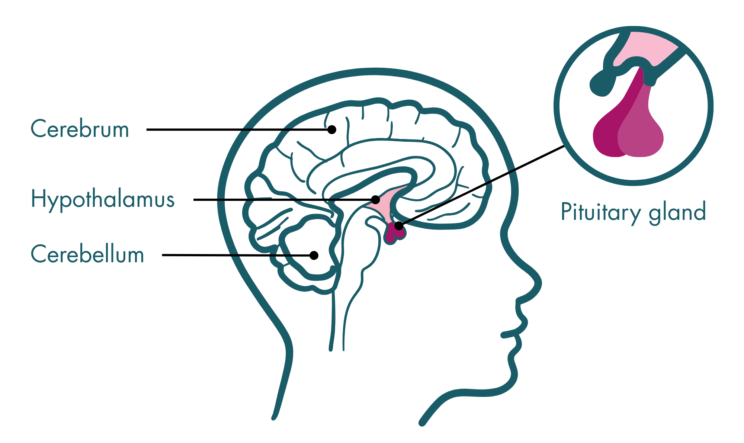
The overproduction of growth hormone is usually due to the presence of a benign (non-cancerous) tumour in the pituitary gland called an adenoma.1
In rare cases, acromegaly can be caused by a tumour in other parts of the body, such as the lungs, pancreas, or another part of the brain.2
Most tumours in the pituitary gland develop as a result of uncontrolled growth caused by a change in the DNA of a cell.3 However, it is not known exactly why this happens.3 However, acromegaly is not usually inherited (passed on from your parents).1
References
- NHS England. Acromegaly. Available at: https://www.nhs.uk/conditions/acromegaly/. Last accessed March 2025.
- May Clinic. Acromegaly. Available at: https://www.mayoclinic.org/diseases-conditions/acromegaly/symptoms-causes/syc-20351222#:~:text=Too%20much%20growth%20hormone%20causes,of%20the%20lung%20or%20pancreas. Last accessed March 2025
- Moffitt cancer centre. What causes pituitary adenomas? Available at: https://moffitt.org/cancers/pituitary-adenoma/causes/. Last accessed March 2025