


About Ankylosing Spondylitis
Symptoms
The slow-onset symptoms of AS vary from person to person and can come and go over time.1
The most characteristic symptom people have with AS is lower back pain and stiffness that persists for longer than 3 months.2,3 These symptoms often vary throughout the day, with stiffness eased by activity but worst in the mornings after a long period of inactivity, often even waking people from their sleep.3
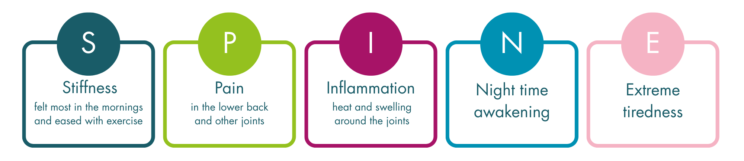
AS can affect everyone differently, so it is advised that you talk to your doctor if you experience any combination of the above symptoms persistently.1
References
- Ankylosing Spondylitis Overview– NHS. Available at: https://www.nhs.uk/conditions/ankylosing-spondylitis/. Last accessed April 2025.
- Lata M et al. Targeting tumor necrosis factor receptors in ankylosing spondylitis. Ann N Y Acad Sci. 2019 Apr;1442(1):5-16. doi: 10.1111/nyas.13933. Epub 2018 Jul 15. PMID: 30008173
- Axial spondyloarthritis (including ankylosing spondylitis):When should I suspect a diagnosis of axial spondyloarthritis?– NICE CKS. Available at: https://cks.nice.org.uk/topics/axial-spondyloarthritis-including-ankylosing-spondylitis/diagnosis/diagnosis/. Last accessed April 2025.