


What causes Ankylosing Spondylitis (AS)?
How does inflammation work in AS?
Our own immune system causes the long-term inflammation underpinning AS. Inflammation is a natural part of the body’s immune response, designed to deal with pathogens and other harmful stimuli. However, when the immune system attacks our healthy tissue, we experience the negative effects.
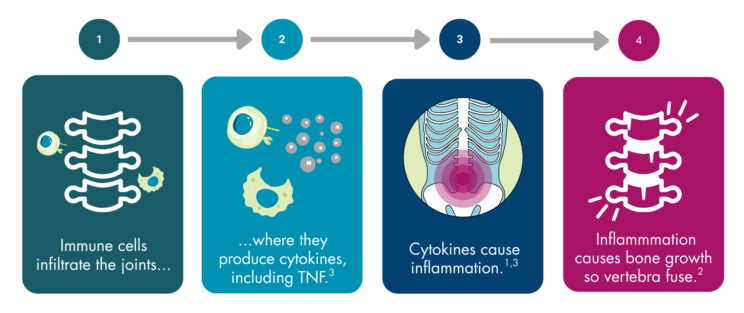
In ankylosing spondylitis (AS), immune system cells infiltrate the joints and release proteins known as cytokines, such as tumour necrosis factor (TNF). These cytokines trigger a cascade of inflammatory events.3
In response to the ongoing inflammation, the body produces excess calcium, which promotes abnormal bone growth. Over time, this can lead to the fusion of spinal vertebrae—a process that contributes to several of the hallmark symptoms of AS.1
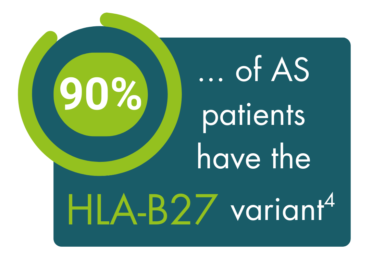
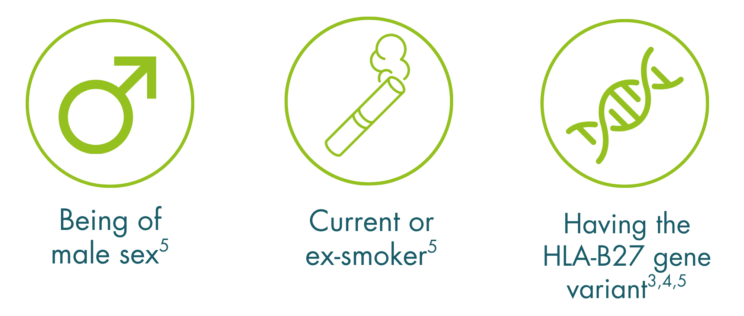
Exactly why our immune cells begin to behave this way is largely unknown, but several factors can make it more likely to happen. AS is more common in those who possess a particular version of an immune-related gene, known as HLA-B27.4-6 There are many other subgroups of people who are more commonly affected by AS, all of which define its risk factors.5
References
- Ankylosing Spondylitis Overview– Creaky Joints. Available at: https://creakyjoints.org/about-arthritis/axial-spondyloarthritis/axspa-overview/ankylosing-spondylitis-facts/. Last accessed April 2025.
- Ankylosing Spondylitis Overview– NHS. Available at: https://www.nhs.uk/conditions/ankylosing-spondylitis/. Last accessed April 2025.
- Lata M et al. Targeting tumor necrosis factor receptors in ankylosing spondylitis. Ann N Y Acad Sci. 2019 Apr;1442(1):5-16. doi: 10.1111/nyas.13933. Epub 2018 Jul 15. PMID: 30008173
- Overview what is ankylosing spondylitis? – Versus Arthritis. Available at: https://versusarthritis.org/about-arthritis/conditions/ankylosing-spondylitis/. Last accessed April 2025.
- Axial spondyloarthritis (including ankylosing spondylitis): What are the risk factors?– NICE CKS. Available at: https://cks.nice.org.uk/topics/axial-spondyloarthritis-including-ankylosing-spondylitis/background-information/risk-factors/. Last accessed April 2025.
- The Link Between HLA-B27 and Arthritis– Arthritis Foundation. Available at: https://www.arthritis.org/diseases/more-about/hla-b27-gene-and-arthritis. Last accessed April 2025.