


Asthma
Asthma is a long-term condition that affects the airways, making it harder to breathe. It causes your airways to swell and narrow, and produce more mucus, all of which make it harder to move air into and out of your lungs.
The exact cause of asthma is not fully understood, but certain factors – such as allergies – are known to increase the likelihood of developing the condition.1Risk factors for developing asthma are explained in more detail on the page What causes asthma?
Asthma symptoms and their severity vary from person to person. For some people, their asthma may be mild, causing only an infrequent and minor impact on their daily lives. For others, symptoms may be regular and severe, causing major problems, and can result in life-threatening flare-ups known as an “asthma attack”.2
Certain things and situations called “triggers” can make asthma symptoms worse and may lead to an asthma attack. These triggers can vary from person to person.
While asthma can be serious, most people are able to keep it under control by taking their medications as recommended by their doctor.
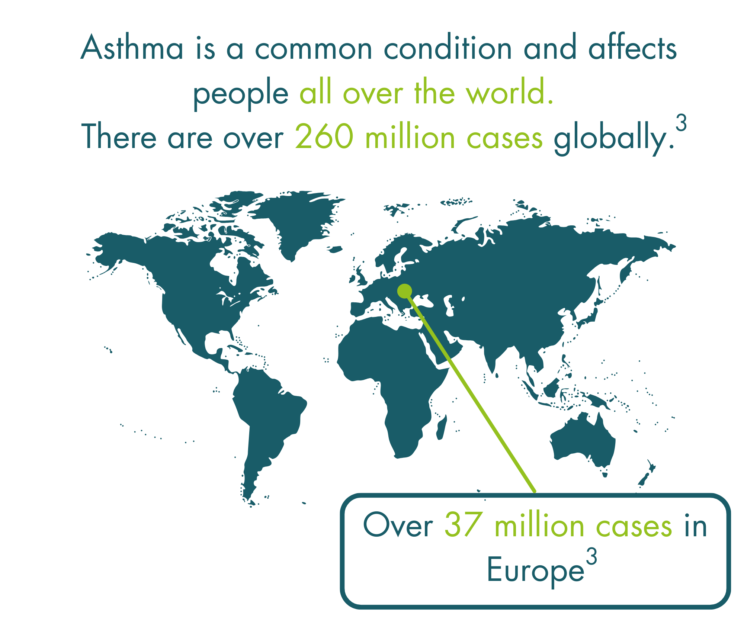
How many people have asthma?
References
- Asthma and lung. Asthma. Available at: https://www.asthmaandlung.org.uk/conditions/asthma/what-asthma. Last accessed April 2025.
- Mayo Clinic. Asthma. Available at: https://www.mayoclinic.org/diseases-conditions/asthma/symptoms-causes/syc-20369653. Last accessed April 2025.
- Wang Z, et al. Global, regional, and national burden of asthma and its attributable risk factors from 1990 to 2019: a systematic analysis for the Global Burden of Disease Study 2019. Respiratory Research. 2023. Jun; 24(169).