


Diagnosis
Asthma is usually diagnosed based on your symptoms and a few simple tests. In most cases, a GP can make the diagnosis, but if there is any uncertainty, they may refer you to a specialist for further assessment.
Tests to measure lung function
You may be given lung function tests to assess how much air moves in and out of your lungs as you breathe. These tests include spirometry and peak flow measurements.1 Another type of breath test, known as the fractional exhaled nitric oxide (FeNO) test, can also be used to assess lung inflammation, although it is currently less widely available.1,2
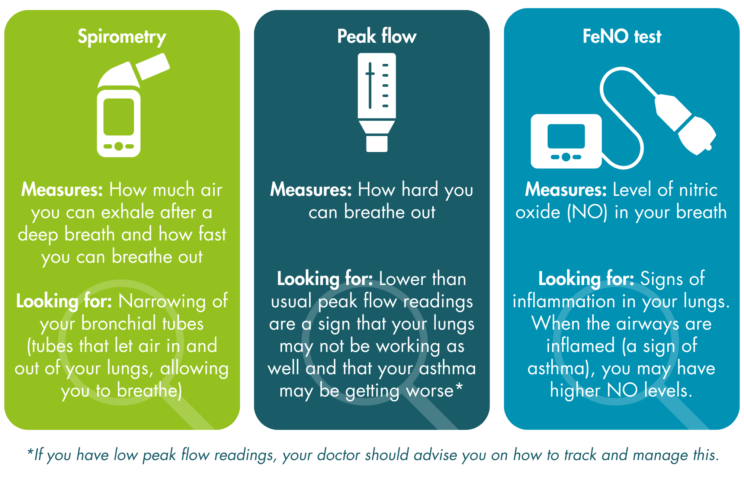
Lung function tests are often done before and after taking a medication called a bronchodilator (a drug that widens the bronchial tubes). If your lung function improves after use of a bronchodilator, it's likely you have asthma.1
Additional tests may be needed to help diagnose asthma, including:
- Allergy tests – skin or blood tests to check if you’re allergic to pets, dust, mould, or pollen
- Imaging tests – e.g., X-rays to identify any structural abnormalities or infections
- Saliva tests – looking for certain white blood cells in the mixture of saliva and mucus released during coughing
- Exercise/cold tests – measures your airway obstruction before and after vigorous exercise or taking breaths of cold air
- Asthma triggers – if they slightly narrow your airways, you likely have asthma1
Your doctor may also perform a physical exam to rule out other possible conditions, such as a respiratory infection or chronic obstructive pulmonary disease (COPD).1
References
- Mayo Clinic. Asthma. Available at: https://www.mayoclinic.org/diseases-conditions/asthma/diagnosis-treatment/drc-20369660. Last accessed April 2025.
- NHS. Fractional Exhaled Nitric Oxide (FeNO). Available at: https://www.england.nhs.uk/aac/what-we-do/innovation-for-healthcare-inequalities-programme/rapid-uptake-products/fractional-exhaled-nitric-oxide/. Last accessed April 2025.