


Complications
Beyond experiencing common symptoms of asthma, such as chest tightness and wheeze, you may also experience other health conditions occurring alongside asthma known as “co-morbidities”. Typical co-morbidities experienced by asthma patients include nasal polyps, eczema and hay fever.
Allergic rhinitis and rhinosinusitis
Allergic rhinitis and rhinosinusitis are often referred to as “hay fever” or “allergies”. Both conditions occur more commonly in someone who has asthma.1 They are thought to be linked to some cases of asthma by type 2 inflammation or “an overactive immune system”.
Eczema (or “atopic dermatitis”)
Eczema is a common skin condition which causes a dry and itchy rash. A weakened skin barrier, which is the outermost layer of skin that plays an important role in protecting your skin and contains some types of cells from the immune system, has a role in what causes eczema.2
Like asthma, allergic rhinitis and rhinosinusitis, eczema is thought to be connected to having type 2 inflammation or “an overactive immune system”, meaning the body reacts very strongly to certain triggers. Like asthma, eczema episodes, or “flares” can be triggered by things including pollen, smoke and stress.3
Other co-morbidities
Other asthma comorbidities include:4
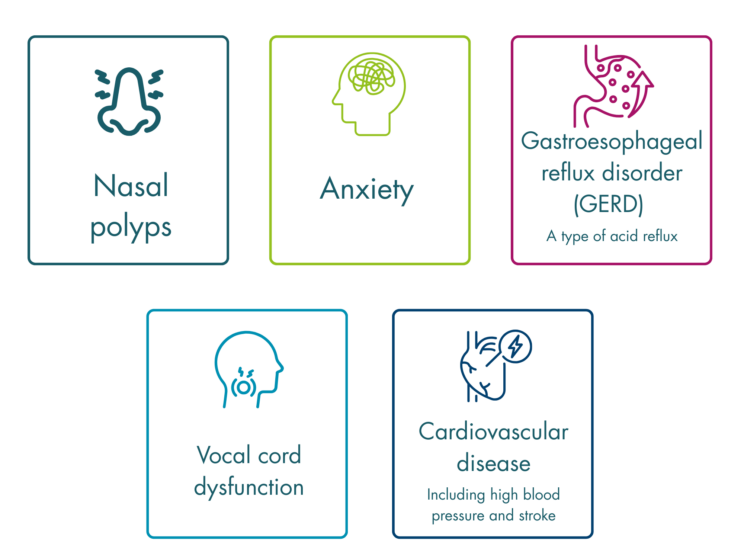
There is evidence that some of these co-morbidities can make your asthma symptoms worse.4 Therefore, if you have any co-morbidities or are concerned that you may have one, it is important to discuss this with your doctor.
In addition to the co-morbidities mentioned above, the following complications may also occur with asthma.
Airway remodelling5
Airway remodelling is the term used to describe changes to the lining of airways in asthma patients. It happens when asthma is not well-controlled over a long period of time and makes your airways thicker or stiffer.
Airway remodelling can make it more difficult to breathe, make asthma symptoms worse and mean that treatments do not work as well. Managing asthma effectively with the right treatment, avoiding triggers and following your asthma action plan are all things that can help reduce the risk of this happening.
While airway remodelling is thought to be mostly permanent, some remodelled airways have been shown to return to normal when proper treatment is followed.6
References
- Marcus P, et al. A retrospective randomized study of asthma control in the US: results of the CHARIOT study. Current Medical Research and Opinion. 2008. Nov;24:3443-3452.
- National Eczema Association. Skin Barrier Basics for People With Eczema. Available at: https://nationaleczema.org/blog/what-is-my-skin-barrier/. Last accessed April 2025.
- National Eczema Association. What is Eczema? Available at: https://nationaleczema.org/eczema/. Last accessed April 2025.
- Medical News Today. What are the most common comorbidities with asthma? Available at: https://www.medicalnewstoday.com/articles/asthma-comorbidity. Last accessed April 2025.
- American Lung Association. What is asthma? Available at: https://www.lung.org/lung-health-diseases/lung-disease-lookup/asthma/learn-about-asthma/what-is-asthma. Last accessed April 2025.
- Asthma Canada. Airway remodelling explained. Available at: https://asthma.ca/airway-remodelling-explained/. Last accessed April 2025.