


What causes asthma?
The underlying cause of people developing asthma is not fully known. However, it is thought that it is due to a combination of environmental and genetic (i.e. in your DNA) factors.1
For some people, their asthma is thought to be linked to Type 2 inflammation. This is often referred to as an “overactive immune system”, which means their immune system reacts very strongly to certain things called triggers1 leading to asthma symptoms.
Risk factors
The following risk factors are thought to raise the chance of a person developing asthma:2,3
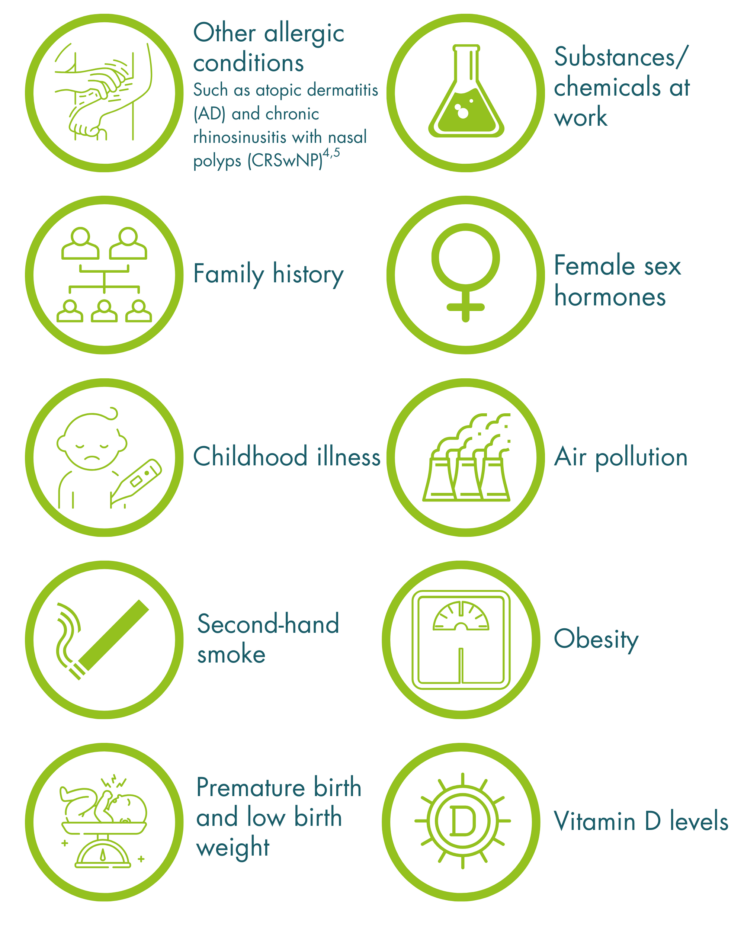
People with asthma will often develop it in childhood, although adults can develop it too2, known as “adult-onset asthma”.
Causes of asthma symptoms and attacks
When considering the causes of asthma, in addition to its underlying causes, it is also important to think about what can cause the symptoms of asthma and an asthma attack.
If you are living with asthma, you will have low-level inflammation (swelling) in your airways most of the time6 even when you do not have any noticeable symptoms. This inflammation makes your airways more sensitive than those of someone who does not have asthma. When you come into contact with a trigger, such as pollen, exercise or smoke, your airways react strongly.
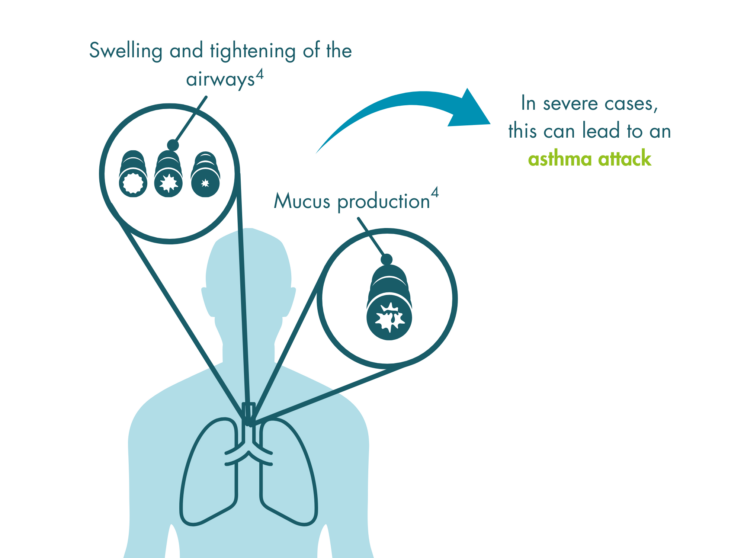
Other triggers include:7
- Respiratory viruses (e.g., a cold or flu virus)
- Different types of weather
- Stress
- Indoor allergens
It's important to remember that asthma triggers can vary from person to person. What affects you might not affect someone else. However, some triggers—such as catching a cold or flu—are more common.7 Understanding your individual triggers is a key part of managing asthma, which is explored in more detail in the section day-to-day life.
After an asthma attack, your airways can remain sensitive for a period of time. This means you may be at higher risk of another attack shortly after.6 Taking extra care during this recovery period and following your asthma action plan closely is essential to help you stay well and avoid further complications.
References
- Allergy Asthma Network. When Asthma Is More Than Just Asthma: Type 2 Inflammation. Available at: https://allergyasthmanetwork.org/news/when-asthma-more-than-asthma-type-inflammation/. Last accessed April 2025.
- Mayo Clinic. Asthma. Available at: https://www.mayoclinic.org/diseases-conditions/asthma/symptoms-causes/syc-20369653. Last accessed April 2025.
- Asthma and Lung. What is asthma? Available at: https://www.asthmaandlung.org.uk/conditions/asthma/what-asthma#what-causes-asthma. Last accessed April 2025.
- Gandhi NA, et al. Targeting key proximal drivers of type 2 inflammation in disease. Nature Reviews Drug Discovery. 2016. Jan;15(1):35-50.
- Tan BK, et al. Incidence of associated premorbid diagnoses of patients with chronic rhinosinusitis. Journal of Allergy and Clinical Immunology. 2013. May;131:1350-1360.
- American Lung Association. What is asthma? Available at: https://www.lung.org/lung-health-diseases/lung-disease-lookup/asthma/learn-about-asthma/what-is-asthma. Last accessed April 2025.
- Asthma and Lung. What are asthma triggers? Available at: https://www.asthmaandlung.org.uk/conditions/asthma/asthma-triggers/understanding-asthma-triggers. Last accessed April 2025.